
"An Emerging Public Health Issue"
Harmful Algal Blooms
Unlike normal algae in freshwater lakes, harmful algal blooms (HABs) can be toxic for people, pets, and wildlife. HABs are known episodically to appear in area lakes, and have even occurred in Yankee Lake. Indeed, HABs are becoming more common world-wide. Learn the signs of HABs. If you think a HAB is present, contact the YLPA immediately, and stay out of the water until you get the all clear.
Harmful Algal Blooms
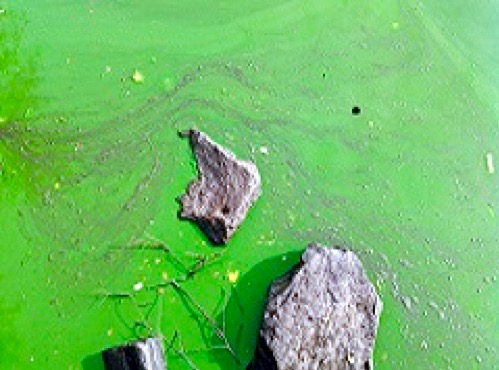
Most algae are harmless and a normal part of freshwater lake biomes. However, some types of algae can grow quickly, form "blooms," and can generate "toxins." These are called Harmful Algal Blooms (HABs). HABs are increasing locally, across New York State, around the nation, and world-wide. The Centers for Disease Control and Prevention (CDC) has tagged HABs as an "Emerging Public Health Issue." HABs can cause nausea, vomiting, diarrhea; skin, eye, or throat irritation; allergic reactions, or breathing difficulties from either contact or drinking contaminated water. Symptoms can be even more pronounced for pets.
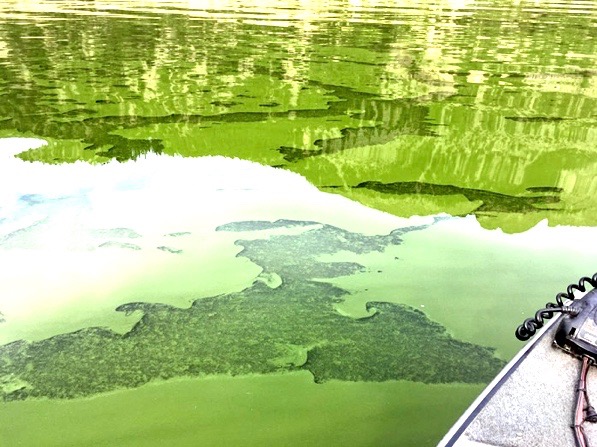
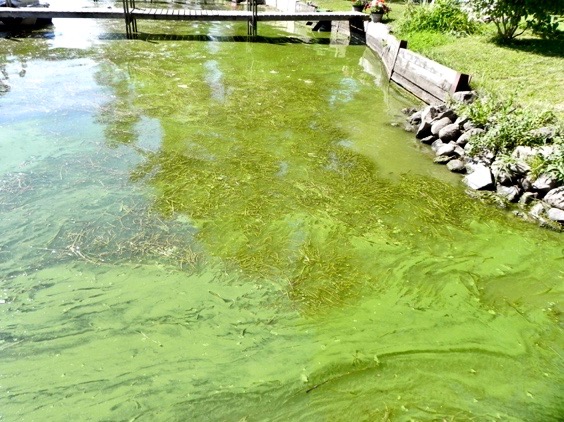
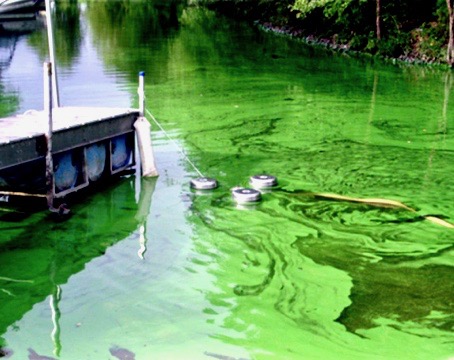
HABs have a very distinctive appearance. Rather than globs of growth floating beneath the surface, HABs are a streaky, soupy layer floating on top of the water. It is often described as looking like spilled paint. A HAB is usually bright pea green and may have bright blue streaks in it. If you see a bloom in process, do not get in the water, touch the water, or ingest the water. This goes for people and pets! If you have been in water that you think had a HAB, get out of the water, wash off in fresh, clean well water, and contact the YLPA immediately, either by phone (845-888-0474) or by email info@yankee-lake.org.
It is important that each YLPA member be aware of HABs, understand why they happen, understand the risks, and help us do everything possible to prevent them.
What Causes HABs?
Algae require two things to survive:
- First is warm, still water. This is up to mother nature. We cannot control the heat or the wind, which aerates the water. HABs do not like aerated (oxygenated) water.
- The other requirement for growth and bloom is nutrients. Some nutrients come naturally from things like dead vegetation and dead animals in or near the water. Other nutrients come from people.
Poorly maintained septic systems leach into the ground and effluents are carried into the lake. Our pets (and wild animals) leave excrement in our yards or in the nearby woods. When it rains, chemical components of their waste are carried by rainwater into the lake. Additionally, you need to understand that, if you fertilize your yard and ornamental plants, then you are fertilizing the weeds and algae in the lake. The fertilizer that is not immediately absorbed by the plants in your yard is washed by the rainwater into the lake. It makes no difference if the fertilizer is solid, liquid, organic or synthetic chemicals. All of these are nutrients that feed not only harmful algal blooms, but they also radically increase the growth rates of aquatic weeds and non-HAB algae.
So, What Can We Do?
- Proactively manage septic systems.
- Cesspool type septics should be pumped every year, as a minimum — even more often if they are used frequently or if you have a big crowd.
- Modern, new septic systems should be pumped every two years, if they are used year-round.
- For seasonal systems, they should be checked at least every three years.
- Manage pet waste. Pet waste left in your yard ends up in the lake as it rains and decomposes. Keep a small lined can in your yard and pick up/deposit pet waste into the can. Then dispose of it with your garbage.
- Fertilizers. Eliminate the use of fertilizers on your yard. All fertilizer, whether organic, chemical or otherwise, will run off in rainstorms and end up in the lake. You are fertilizing the lake. We don't want to fertilize the lake. Your fertilizer in the lake not only causes the growth of weeds, but the growth of algae, including the HAB kind. And no, your property does not have to be lakefront for your fertilizer to end up in the lake. Especially if you are uphill from the lake, your fertilizer will fertilize the lake.
- Retain or re-introduce shrubs at the lakeshore. These plants are the final barrier between water runoff and the lake. They serve as "filters." If you have natural shrubs — blueberries, mountain laurel, rhododendron, etc. — keep them. If your lakefront doesn't have shrubs, try adding some of the natural versions just listed. Do not plant invasive species, such as yellow water iris, at the lake shore.
- Reduce the use of impervious materials, such as pavement, on your property. Use gravel instead.
- Consider using a rain barrel to capture water runoff from your roof. This helps prevent stormwater runoff that carries fertilizers into the lake.
- Consider a rain garden that captures water runoff and uses it for water-loving plants.